Ayurvedic Treatments
Lepanam
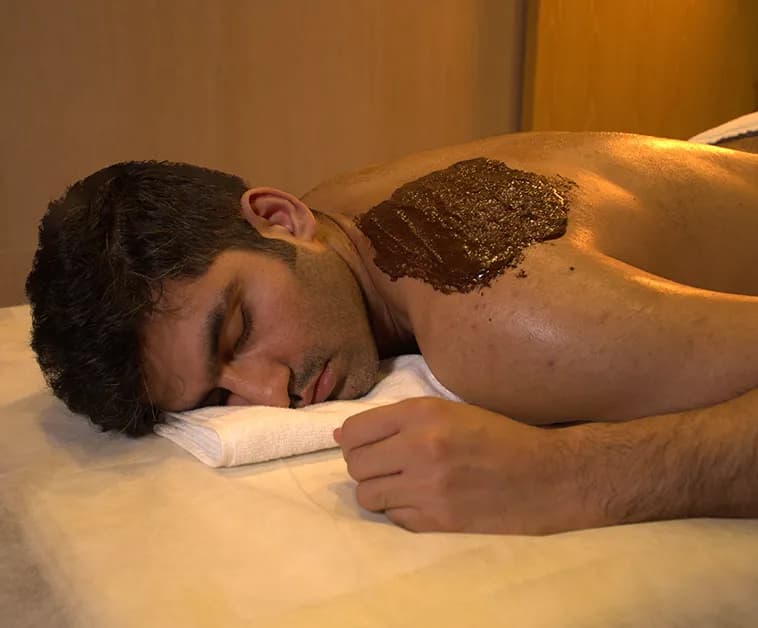
Herbal powders are mixed into a fresh paste, spread in an even layer over one area and removed as it begins to dry.
Lepanam
Lepanam means the application of a lepa, a paste. Dried herbs are ground to a fine powder, mixed with a liquid into a smooth paste and spread over one part of the body, most often a joint or a patch of skin. Nothing is rubbed in. The paste simply sits on the surface for a set time and is then taken off.
The classical texts give careful rules for it. Sushruta describes several kinds of paste, graded by thickness and by whether they are applied cool or warm. The paste is spread against the direction of the hair, made fresh for each use, and removed once it starts to dry. Ayurveda traditionally chooses cooling pastes when Pitta is considered raised in an area.
At 22 Ayur the therapy is given by trained Ayurvedic therapists, and the practitioner chooses the herbs. The paste feels cool and damp when it goes on, then tightens slightly on the skin as it dries. People usually book it for a joint that feels warm and puffy after strain. It is a traditional therapy and does not replace a doctor's examination.
Key Benefits
A fresh herbal paste applied to one chosen area
Cool and damp on the skin, with no pressure or rubbing
Traditionally chosen when Ayurveda considers Pitta to be raised locally
People usually book it for a knee, ankle or wrist that feels warm and puffy
The herbs are selected for you by the practitioner
What happens during Lepanam
- 1
Looking at the area
The practitioner looks at the joint or skin, asks how it started and whether you have seen a doctor about it, and checks for allergies. The choice of powder and mixing liquid follows from this.
- 2
Applying
You sit or lie so the area is supported and still. The therapist spreads the paste by hand in an even layer, working against the direction of the hair, and leaves it uncovered.
- 3
Waiting
You rest while the paste sits on the skin. It feels cool at first and then firmer. Classical practice is to take it off as it begins to dry, before it cracks and pulls.
- 4
Removing
The paste is dampened and wiped away with warm water and a cloth. The skin is patted dry, and a little oil may be applied if the area feels tight.
Who usually books it
- People with one joint that feels warm, puffy or overworked after activity
- Guests who cannot tolerate massage on a tender area
- People following a practitioner's plan that pairs paste with other local therapies
Often chosen for
Our practitioners draw on Lepanam in plans for these concerns. Each page explains the approach and what it can and cannot do.
When to wait or ask first
- Open wounds, broken or weeping skin on the area
- A known allergy to any herb in the paste: tell the practitioner what you react to
- A joint that is suddenly very hot, red and painful, or any fever: see a doctor first
Oils and herbs
Common Kerala powders for Lepanam include Kottamchukkadi, Jadamayadi and Nagaradi churnam, along with single herbs such as sandalwood and turmeric. They are mixed with water, lemon juice, rice washing water or Dhanyamla, the fermented grain liquid. The practitioner decides the combination.
After your session
- Keep the area dry and loosely covered for a couple of hours
- Rest the joint for the day; no sport or heavy lifting
- Tell us if the skin itches or turns red afterwards
How often
Lepanam is traditionally repeated daily for a short run, often seven days, and reviewed by the practitioner. It is commonly given together with other local therapies and seldom planned alone.
Frequently Asked Questions
Some pastes contain turmeric or dark herbs and can leave a faint yellow or brown tint on the skin for a day, and can mark light fabric. Wear dark, loose clothing that leaves the area easy to reach.
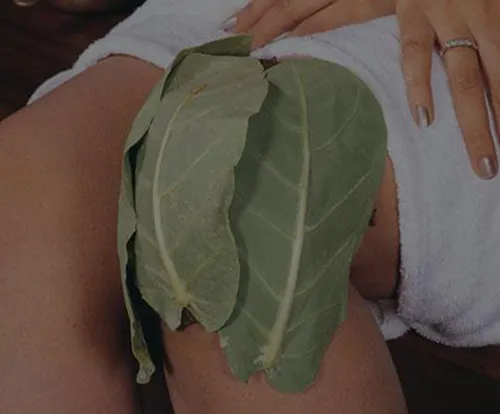
Both use a herbal paste on one area. In Lepanam the paste is left open to the air and removed as it dries. In Upanaham it is applied warm, covered with leaves and bandaged, and stays on for hours.
Cool and wet at first, like a clay mask, then gradually firmer. Some pastes give a mild warmth or tingle. If it burns or itches, tell the therapist and it will be washed off.
The classical texts do describe face pastes, called mukha lepa. Whether one is suitable for you depends on your skin and the herbs involved, so ask the practitioner before booking it for the face.
Have a question we have not covered? Send it to the front desk.