Ayurvedic Treatments
Sweda with Kizhi
Warm bundles of herbs are dipped in oil and pressed rhythmically over the body, bringing moist heat to stiff muscles and joints.
Sweda with Kizhi
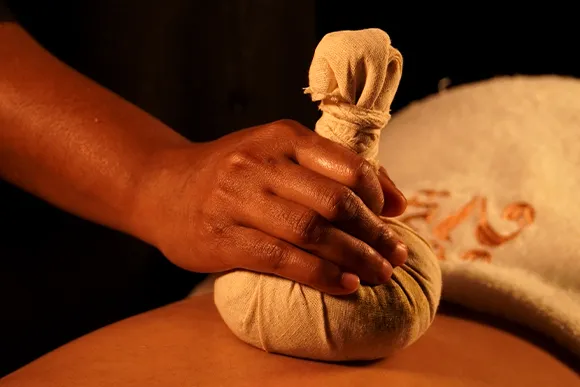
Kizhi means bundle. Herbs, powders or rice are tied into muslin cloth to make poultices about the size of a fist, which are warmed and pressed over the body in a steady rhythm. In Ayurveda this belongs to Swedana, the family of warming therapies, which is why the full name is Sweda with Kizhi.
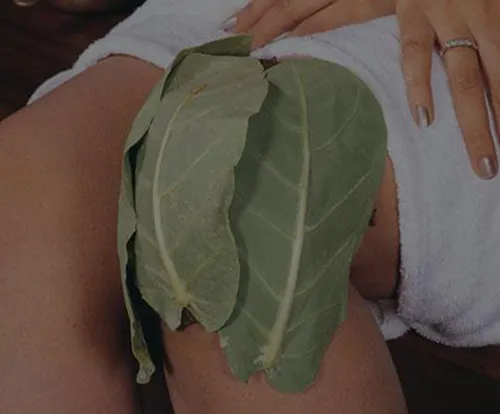
Several kinds are used in the Kerala tradition. Elakizhi uses fresh medicinal leaves fried with coconut and lemon. Podikizhi uses dry herbal powders. Navarakizhi uses a red rice cooked in milk and a herbal decoction. The practitioner chooses between them according to what you come in with.
Ayurveda traditionally uses this moist heat for stiffness and aches in the back, neck, shoulders and joints, which the texts link with Vata and Kapha. Guests feel a firm, warm, tapping pressure and the scent of the herbs. It is supportive care, and the practitioner checks first whether heat is right for you.
Key Benefits
Traditionally used to ease stiff, aching muscles and joints
Moist heat that many guests find soothing on the back, neck and shoulders
Traditionally chosen when Vata and Kapha are disturbed
Often combined with Abhyangam in a practitioner's plan
Poultices prepared for the individual session
What happens during Sweda with Kizhi
- 1
Assessment
The practitioner asks where the stiffness or ache is, how long it has been there and whether any diagnosis has been made, then chooses the type of Kizhi.
- 2
Oil application
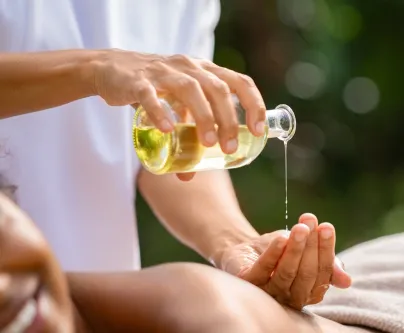
Warm oil is applied to the body, usually as a short Abhyangam.
- 3
Poultice massage
The poultices are heated in warm oil or a herbal liquid. The therapist tests the heat, then presses and glides them over the body in a rhythm, changing to a freshly warmed poultice as each one cools.
- 4
Rest
The body is wiped down and you rest under a sheet for a few minutes so you do not cool too quickly.
Who usually books it
- People with a stiff back, neck or shoulders from desk work or driving
- Guests with aching knees or joints who have been told warmth helps
- Active people with tired muscles
Often chosen for
Our practitioners draw on Sweda with Kizhi in plans for these concerns. Each page explains the approach and what it can and cannot do.
Read more
When to wait or ask first
- A hot, red, swollen joint or a fresh injury: heat may not be right, so see the practitioner first
- Fever or skin infection
- Reduced skin sensation, for example from diabetic neuropathy: tell the therapist so the heat is kept low
- Pregnancy, unless the practitioner advises a suitable form
Oils and herbs
Poultice contents vary with the type: fresh leaves such as castor, tamarind and nirgundi for Elakizhi; dry herbal powders for Podikizhi; Navara rice cooked in milk for Navarakizhi. Sesame based oils are used to warm them.
After your session
- Keep warm for an hour or two and avoid cold showers
- Drink warm water
- Rest the area; leave heavy exercise for the next day
How often
For a long standing problem a course of seven to fourteen daily sessions is the traditional pattern. For general upkeep guests come every two or three weeks.
Frequently Asked Questions
It depends on the type chosen for you. Common contents are fresh medicinal leaves, dry herbal powders, or Navara rice, with ingredients such as turmeric, ginger and sesame.
Kizhi is traditionally used in Ayurveda to ease joint stiffness and the aches that come with arthritis. The warm herbal bundles bring moist heat to the area. It is supportive care alongside your doctor's treatment, and our practitioner will check first whether heat is right for your joints.
For a long standing problem, seven to fourteen consecutive sessions is the traditional course. For general upkeep, once every two or three weeks.
It is warm, not scalding. The therapist tests each poultice on their own skin and on yours before using it, and you can ask for less heat at any time.
Elakizhi uses fresh leaves and is oilier and softer. Podikizhi uses dry powders and is drier and more warming.
A little. The bundles are warmed in medicated oil and the scent of the herbs stays on the skin until you wash. Wear clothes you do not mind getting a trace of oil on, and bring a scarf or cap if you would like to cover your hair on the way home.
In the classical sequence the body is oiled first, so Kizhi normally follows a short oil massage. The oil lets the bundles glide and stops the heat from feeling harsh on dry skin. The practitioner will tell you how your session is put together.
Have a question we have not covered? Send it to the front desk.