Ayurvedic Treatments
Upanaham
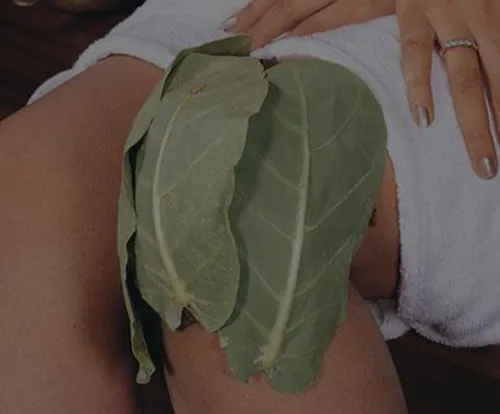
A warm herbal paste is spread thickly over a joint, covered with leaves, bandaged with cloth and left in place for some hours.
Upanaham
What is Upanaham?
Upanaham is the Ayurvedic poultice. A paste of herbal powders is warmed and spread in a thick layer over a joint or a section of the back. It is covered with leaves, then wrapped firmly in place with a cotton bandage. You leave with the wrap still on, and it stays in place for the number of hours the practitioner advises.
The classical texts list Upanaha among the forms of sweda, the warming therapies. Sushruta names it as one of four. The idea is slow, mild warmth held against the body for a long time, not strong heat for a short time. Ayurveda traditionally uses it when Vata is considered raised in a joint, which it links with stiffness and dryness.
At 22 Ayur the therapy is given by trained Ayurvedic therapists, and the practitioner chooses the paste. People usually book it for a knee, ankle, elbow or shoulder that feels stiff on waking. The wrap feels snug and warm at first, then simply present. It is a traditional therapy and should sit alongside, never in place of, your doctor's advice.
Key Benefits
Mild warmth held on one joint for hours, not minutes
Traditionally used when Ayurveda considers Vata to be raised in a joint
People usually book it for a knee or ankle that feels stiff in the morning
You can go home and rest with the wrap on
Often follows Kizhi or a local oil therapy in a plan
What happens during Upanaham
- 1
Assessment
The practitioner examines the joint, asks about any scan, diagnosis or medication, and checks your skin. You are told how long the wrap should stay on and how to remove it at home.
- 2
Applying the paste
The herbal paste is warmed until comfortable and spread thickly over and around the joint. The therapist checks the temperature with you before covering it.
- 3
Leaves and bandage
Warmed leaves are laid over the paste, then a cotton cloth is wound round the joint to hold everything in place. It should feel firm but not tight. Say so if you feel any throbbing or tingling.
- 4
Going home
You leave with the wrap on and keep it for the advised time. Afterwards you unwind the bandage, lift off the leaves and wash the paste away with warm water.
Who usually books it
- People with a stiff knee, ankle, elbow or shoulder
- Guests who can rest at home for some hours after the visit
- People already taking a course of local therapies for one joint
Often chosen for
Our practitioners draw on Upanaham in plans for these concerns, and each concern page explains the approach and what it can and cannot do.
Read more
When to wait or ask
- A hot, red, very swollen joint, or a fresh injury: see a doctor first
- Broken skin, a rash or infection where the wrap would sit
- Reduced feeling in the limb or poor blood flow to it: ask your doctor and tell the practitioner
- A known allergy to herbs, leaves or adhesive dressings
Oils and herbs
The paste is traditionally made from Vata settling herbal powders with rock salt, a little oil and a sour liquid such as Dhanyamla. Kottamchukkadi churnam is a common Kerala choice. Castor leaves are the classical covering, and the bandage is plain cotton cloth.
After your session
- Keep the wrap dry: no shower or bath until it is off
- Loosen or remove it at once if you feel numbness, burning or itching
- Rest the joint; avoid long walks and stairs where you can
How often
Upanaham is traditionally repeated daily for a course, often seven days, with the classical pattern being a wrap put on in the evening and taken off the next morning. The practitioner sets the plan.
Upanaham at 22 Ayur is given at a clinic licensed by the Dubai Health Authority, listed on the Dubai Medical Registry as 22 Ayurvedic Center LLC. A consultation before Upanaham at 22 Ayur is with Dr Thasni, the clinic’s medical director, who is licensed by the Dubai Health Authority as an Ayurveda Practitioner. Upanaham is traditional, supportive care and does not replace the advice of your doctor. This page on Upanaham was written by the 22 Ayur clinic team and last updated . How we review content.
Frequently Asked Questions
The practitioner gives you a time when it is applied. Classical texts describe a wrap put on at night and removed in the morning, but shorter periods are common. Follow the time you are given and do not extend it.
Usually yes, with care. A wrap on a knee or ankle limits how far the joint bends, so plan a quiet day and arrange a lift if it is on your driving leg.
It can. The paste is oily and dark, and a little may seep through the cloth. Wear old, loose clothing over it and put an old towel under the joint if you sleep with it on.
Lepanam is a paste left open to the air and removed as it dries, during the session. Upanaham is applied warm and thick, sealed under leaves and a bandage, and worn for hours.
Have a question about Upanaham we have not covered? Send it on WhatsApp.