Ayurvedic Treatments
Kadeevasti / Greevasti / Januvasti
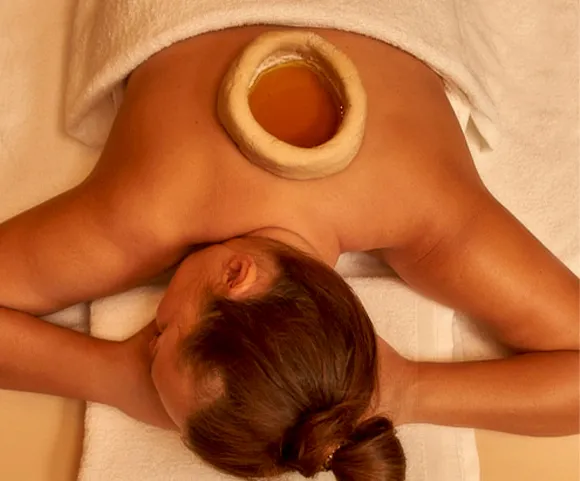
Warm medicated oil is held in a ring of dough over the lower back, neck or knee, keeping steady warmth on one area.
Kadeevasti / Greevasti / Januvasti
What is Kadeevasti / Greevasti / Januvasti?
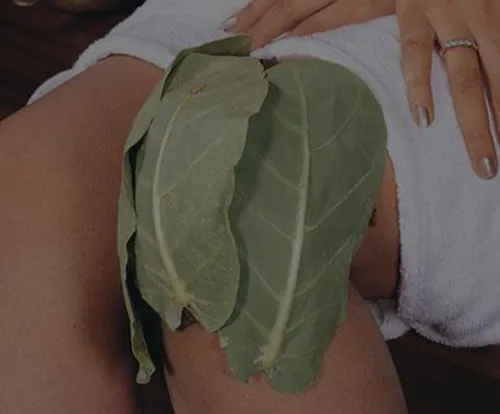
Kati Vasti, Greeva Vasti and Janu Vasti are the same therapy applied to three places: the lower back (kati), the neck (greeva) and the knee (janu). You may also see them written Kadeevasti, Greevasti and Januvasti. A ring of black gram dough is pressed onto the skin to make a small well, and warm medicated oil is poured in and kept there.
The method comes from the Kerala tradition. Because the oil stays in one place and is kept warm, the area receives steady heat and oil for the whole session, which is different from a massage where the hands keep moving. Ayurveda traditionally uses it for stiffness and aching in the back, neck and knees, which it links with Vata dosha.
It is a quiet therapy. You lie still while the therapist replaces the oil as it cools. It is supportive care alongside your doctor's or physiotherapist's treatment, and the practitioner will ask about any scan or diagnosis before recommending it.
Key Benefits
Steady warmth and oil on one area: lower back, neck or knee
Traditionally used to ease stiffness and aching in the back, neck and knees
Traditionally chosen when Vata dosha is disturbed in a joint
A still, quiet therapy with no forceful movement
Often paired with Kizhi or Abhyangam in a practitioner's plan
What happens during Kadeevasti / Greevasti / Januvasti
- 1
Assessment
The practitioner asks where the pain is, what brings it on, and whether you have a diagnosis or scan. This decides which of the three is given.
- 2
Building the well
You lie face down for the back or neck, or on your back for the knee. A ring of soft dough is shaped on the skin and sealed so it holds oil.
- 3
Warm oil
Warm medicated oil is poured into the ring. As it cools the therapist removes some and adds freshly warmed oil, so the temperature stays even.
- 4
Massage and rest
The oil and dough are removed, the area is massaged gently, and you rest for a few minutes.
Who usually books it
- People with a stiff, aching lower back from sitting or driving
- Neck and shoulder tension from desk and phone use
- Stiff, aching knees, including with age
- Guests who cannot tolerate deep pressure on a sore area
Often chosen for
Our practitioners draw on Kadeevasti / Greevasti / Januvasti in plans for these concerns, and each concern page explains the approach and what it can and cannot do.
When to wait or ask
- Sudden severe pain, numbness, weakness in a leg or arm, or loss of bladder or bowel control: see a doctor urgently
- A hot, red, swollen joint or a recent injury
- Skin infection or broken skin on the area
- Fever
- Late pregnancy for the lower back, as it means lying face down
Oils and herbs
Sesame based classical oils are usual. Dhanwantharam, Sahacharadi, Mahanarayana and Murivenna are common choices, selected by the practitioner.
After your session
- Keep the area warm and covered for a couple of hours
- Avoid lifting, long drives and hard exercise that day
- Avoid a cold shower straight afterwards
- Keep up any exercises your doctor or physiotherapist has given you
How often
The traditional course is seven consecutive sessions, extended to fourteen for long standing problems. Some guests return monthly.
Kadeevasti / Greevasti / Januvasti at 22 Ayur is given at a clinic licensed by the Dubai Health Authority, listed on the Dubai Medical Registry as 22 Ayurvedic Center LLC. A consultation before Kadeevasti / Greevasti / Januvasti at 22 Ayur is with Dr Thasni, the clinic’s medical director, who is licensed by the Dubai Health Authority as an Ayurveda Practitioner. Kadeevasti / Greevasti / Januvasti is traditional, supportive care and does not replace the advice of your doctor. This page on Kadeevasti / Greevasti / Januvasti was written by the 22 Ayur clinic team and last updated . How we review content.
Frequently Asked Questions
Kati Vasti is for the lower back, Greeva Vasti for the neck, and Janu Vasti for the knee. Our practitioner will recommend one during your consultation.
No. The dough is soft and moulds to the body. Most guests find the pool of warm oil pleasant.
Seven consecutive sessions is the traditional course, and fourteen for long standing problems. The practitioner will advise after seeing you.
Yes. It is often paired with Pichu, Sweda with Kizhi, or a full body Abhyangam.
Tell the practitioner and bring any scan report. It is used as supportive care alongside medical treatment, and the practitioner will say if it is not suitable.
Kati is the lower back, Greeva is the neck and Janu is the knee. Vasti here means to hold or retain. The method is the same in all three: a ring of dough is built on the area and warm oil is held inside it. Only the place changes.
The oil is held inside the dough ring and wiped away at the end, but a trace always remains on the skin. Wear loose, dark clothes that are easy to change out of.
Have a question about Kadeevasti / Greevasti / Januvasti we have not covered? Send it on WhatsApp.