Ayurveda, Hijama and Homeopathy: Three Traditions Compared
What traditional healing methods does alternative medicine use around the world?
Ayurveda is a system from India built on three doshas. Hijama is wet cupping, mostly from Arabic and Greco Arab practice. Homeopathy began in Germany and uses highly diluted remedies. In Dubai all three are licensed health services, each with its own licence title. Research support is limited for Ayurveda and cupping, and a 2015 Australian assessment found no reliable evidence for homeopathy in any condition.
Ayurveda, Hijama and homeopathy are three separate traditions, and 22 Ayur, a DHA licensed clinic in Dubai, offers all three. They began in different places, rest on different ideas and feel different in the room. This page sets them side by side, reports what research has found for each, and explains the rules Dubai sets for them.
How do the three compare at a glance?
| Point | Ayurveda | Hijama | Homeopathy |
|---|---|---|---|
| Where it began | India. | Mostly Arabic and Greco Arab practice. | Germany, over two centuries ago. |
| Central idea | Health as a balance of three doshas. | Suction on the skin, with small scratches in wet cupping. | Like matched with like, in highly diluted remedies. |
| A first visit | Questions and a pulse reading, then a plan. | Health questions, then cups on chosen points. | A long talk, then a remedy. |
| Licence title in the UAE | Ayurveda Practitioner. | Hijama Therapist, added to an existing health licence. | Homeopathy Practitioner. |
| What reviewers report | Few well designed trials point to a benefit. | May reduce pain, but the evidence is not strong. | No reliable evidence for any condition. |
Where does each tradition come from?
Ayurveda is old. The WHO benchmarks for the practice of Ayurveda put its written record at about three and a half thousand years. The name means knowledge of life. It is still the main system of its kind in India, Nepal, Sri Lanka and Bangladesh.
Hijama is wet cupping. A WHO working paper on cupping therapy says cups have a long written record in Chinese, Unani and Persian medicine, among other systems. Wet cupping, it says, comes mostly from Arabic and Greco Arab practice. Our page on Hijama and cupping explains the two words.
Homeopathy is young beside Ayurveda. The US National Center for Complementary and Integrative Health, or NCCIH, says it began in Germany more than two hundred years ago.
Three different ideas about the body
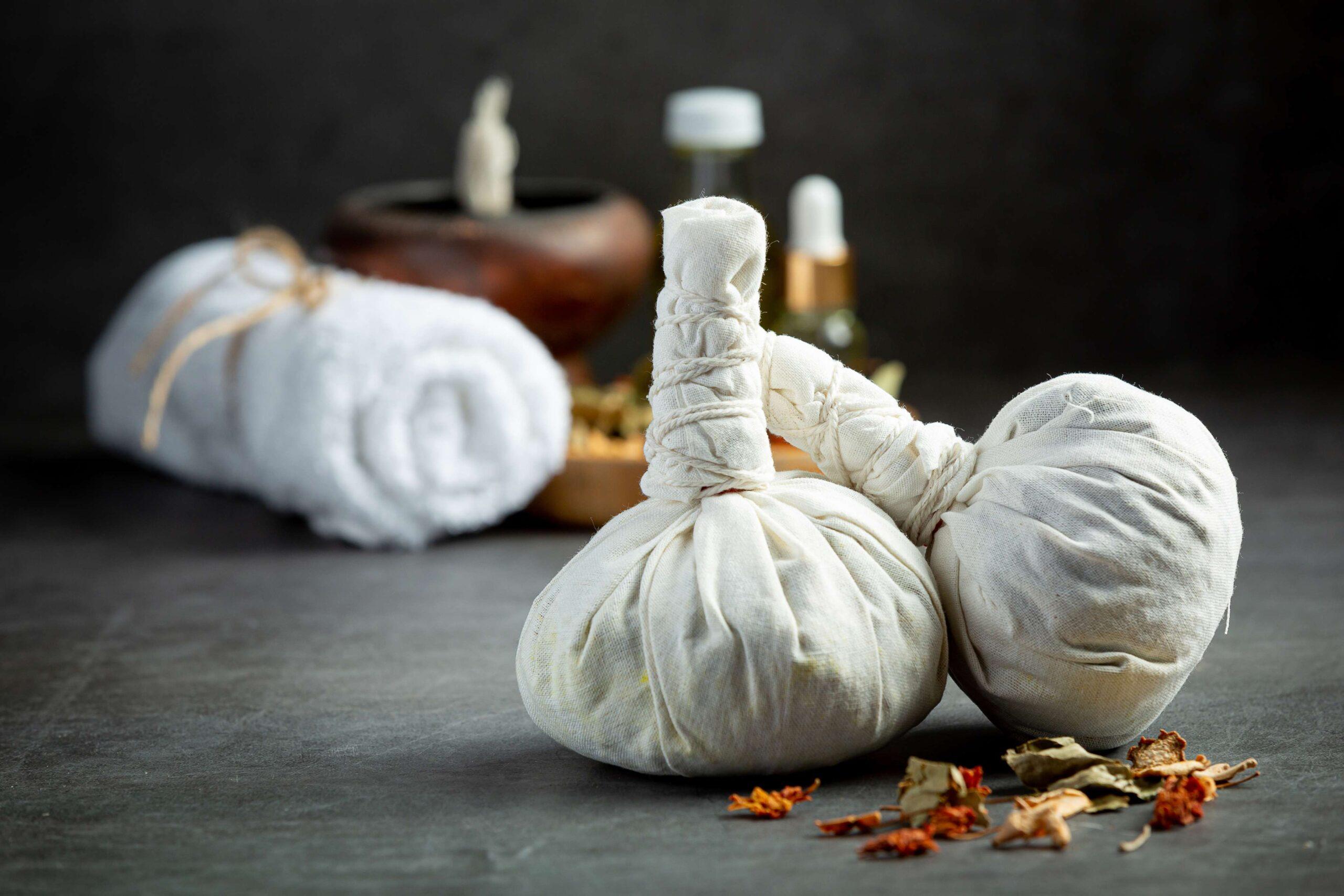
The WHO benchmarks rest Ayurveda on two doctrines, the five elements and the three doshas. The Dubai Health Authority's scope of practice for traditional medicine describes health in Ayurveda as a balance of Vata, Pitta and Kapha. It lists the therapies as herbs, food, Panchakarma cleansing, massage and yoga. Our glossary explains what a dosha is.
Hijama is one procedure, not a whole system. In Unani medicine it sits inside the theory of the humours. The WHO paper adds that to describe this is not to back it. The WHO benchmarks list a cousin among the methods of Ayurveda, bloodletting by suction over small skin cuts.
Homeopathy has two founding ideas. One is that a remedy is matched to the person's symptoms, like with like. The other is the smallest dose.
The NCCIH notes that many remedies are so diluted that no molecules of the first substance remain. It also says several key ideas of homeopathy do not agree with the basic ideas of science.
What happens in the room?
Ayurveda
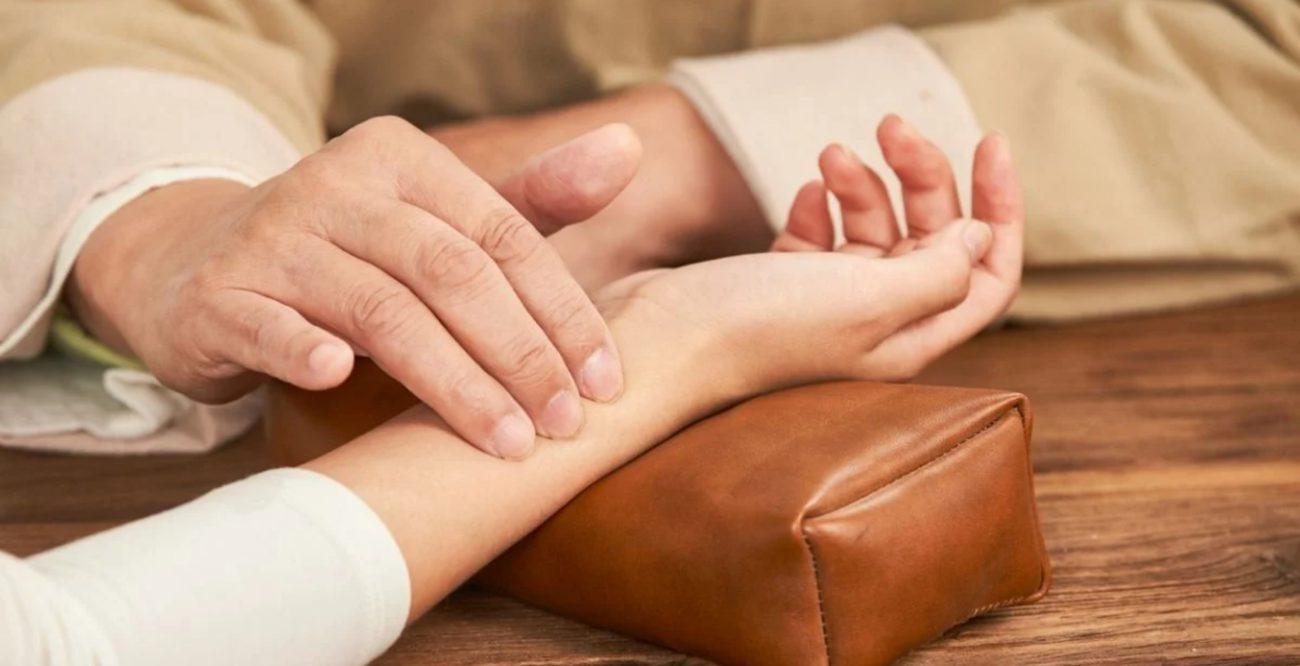
A first visit is part talk, part examination. Three fingers rest on your wrist for a pulse reading, called Nadi Pariksha. Then come questions about how you eat, sleep and spend your day.
The pulse reading belongs to the tradition. It is not a medical diagnosis, and it finds or rules out no disease. It guides the choice of therapies, oils and diet.
Hijama
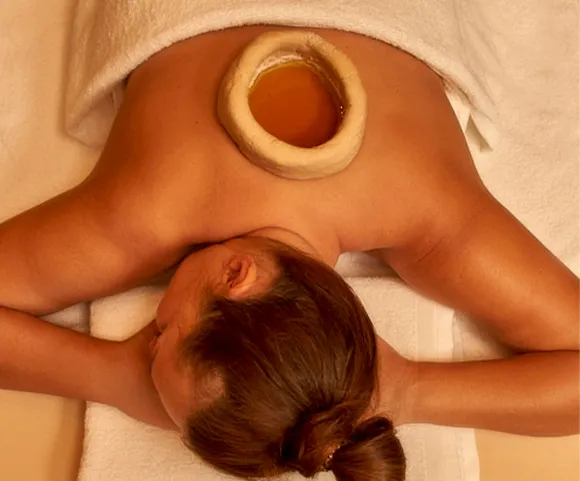
In wet cupping, cups are placed on the skin with suction, most often on the upper back. They are lifted, a few very small scratches are made with a sterile single use blade, and the cups go back on. A small amount of blood is drawn.
Dry cupping uses the cups and suction alone, with no scratches and no blood. Both leave round marks, which usually fade within a few days to two weeks.
Homeopathy
A homeopathic consultation involves no hands-on work. You are asked about your main concern and what makes it better or worse. Then come questions about sleep, thirst, food, temperament and the health of your family.
The remedy is given as small sweet pills or drops. A follow up usually comes some weeks later.
What has research found for each?
For Ayurveda, the NCCIH fact sheet on Ayurvedic medicine says few well designed trials and reviews point to a benefit from Ayurvedic approaches. It also warns that some Ayurvedic preparations contain lead, mercury or arsenic in amounts that can be toxic. So ask where a product comes from and who chose it for you.
For cupping, the NCCIH page on cupping says most research is of low quality. Cupping may help reduce pain, it says, but the evidence is not strong.
A 2020 review of 18 trials in 1,172 people with chronic pain found less pain in the short term than with no treatment. Against sham cupping it found no significant difference, and the trials had a risk of bias. The WHO paper reports a higher risk of infection with wet cupping than with dry.
For homeopathy, the NCCIH says there is little evidence to support it for any specific health condition. It cites a 2015 report by Australia's National Health and Medical Research Council, which took in 57 reviews of 176 studies. The report found no reliable evidence that homeopathy works for any health condition.
Age alone does not settle the question for any of the three. The World Health Organization's questions and answers on traditional medicine say a practice still needs strict scientific testing, however long it has been in use.
How does Dubai regulate the three?
All three sit inside the health system. The DHA scope of practice covers eight fields, Ayurveda and homeopathy among them. Hijama has no section of its own there. Cupping appears under Chinese medicine and Unani, where wet cupping must follow sterile technique.
Those it covers must send you to a medical doctor when needed. They must not change, reduce or stop a doctor's prescription. They must not claim to end any named disease.
Who may practise is set by the UAE's unified qualification requirements for health professionals. For an Ayurveda Practitioner or a Homeopathy Practitioner, the first route listed is a degree of at least five years with an internship. It also asks for two years of experience. An Ayurveda massage therapist may practise only under the supervision of an Ayurveda Practitioner.
The Hijama Therapist title can only be added to a health licence the person already holds. The holder needs a bachelor's degree or higher, two years of experience, approved training of at least 25 hours and 20 treated cases. Hijama must also be done in a health facility.
The DHA manual for licensing health facilities lists Ayurveda, Homeopathy and Hijama among the fields that an outpatient centre for traditional medicine may offer. To check a licence yourself, follow our guide on Ayurveda licensing in Dubai.
The WHO global report on traditional and complementary medicine gives UAE figures as of 2012. Between 40 and 59 per cent of people used a group of practices that includes cupping therapy. Ayurveda and homeopathy were each used by 1 to 19 per cent.
Choosing between them
Start from the kind of visit you want. Ayurveda is the choice for hands-on oil therapies and advice on food and routine. If massage is what you have in mind, our guide to picking a massage session is the quicker read.
Hijama is one procedure, and those who keep it as a routine come every one to three months. Homeopathy is a long talk and then a remedy.
None of the three replaces a diagnosis or medicine from your doctor. For a closer look at two of them, read Ayurveda and homeopathy compared.
Who should check with a doctor first?
- Anyone with symptoms that no medical doctor has examined yet.
- Anyone on blood thinning medicine or with a bleeding condition, before cupping of either kind.
- Anyone with anaemia, low blood pressure or poorly controlled diabetes, and anyone who tends to faint, before wet cupping.
- Anyone who is pregnant or breastfeeding. Wet cupping is not given in pregnancy, and we need to know before anything else is booked.
- Anyone hoping to stop a prescribed medicine. That decision belongs to you and your prescriber.
Wet cupping is not given to children or frail older adults, or over skin that is infected. We would add that an emergency belongs in a hospital.
The NCCIH says not to use Ayurvedic medicine to put off seeing a health care provider. It says not to use homeopathy in place of conventional care or vaccines. It also says to tell your providers what you use.
What does a visit to 22 Ayur involve?
22 Ayur is an outpatient clinic on Al Mina Road in Jumeirah, near Port Rashid. It is listed on the Dubai Medical Registry as 22 Ayurvedic Center LLC.
Dr Thasni, our medical director and a DHA licensed Ayurveda practitioner, takes the Ayurveda consultation. A homeopathy consultation is with Dr Veena Ambewadikar, a DHA licensed homeopathy practitioner. Bring a list of your medicines and any recent test reports.
A Hijama visit begins with health questions about medicines, anaemia, diabetes and bleeding. Cups and blades are sterile and single use, and the skin is disinfected before and after. Our guide on what to do before and after Hijama covers meals, rest and care of the marks.
The clinic is closed on Mondays. Hours are 10:00 to 21:30 from Tuesday to Friday, and 09:00 to 21:30 on Saturday and Sunday. Booking is by WhatsApp or phone, and the clinic gives a receipt you can submit to your insurer.
Questions people ask
Is Hijama part of Ayurveda?
No. Hijama comes mostly from Arabic and Greco Arab practice. Ayurveda does have a related method of its own, bloodletting by suction over small skin cuts, which the WHO benchmarks list. At 22 Ayur the two are separate services, and you book them separately.
What is the difference between Hijama and dry cupping?
Both use cups held on the skin by suction. In Hijama, or wet cupping, the cups are lifted and a few very small scratches are made. The cups are placed again and a small amount of blood is drawn. Dry cupping has no scratches and no blood. Both leave round marks that fade.
Are homeopathic remedies the same as Ayurvedic medicines?
No. Homeopathic remedies are made by repeated dilution and shaking. The NCCIH notes that many are so diluted that no molecules of the first substance remain. Ayurvedic products are a different thing. The NCCIH describes them as made mainly from plants, with some from animal, metal or mineral sources.
Can I use Ayurveda, Hijama or homeopathy alongside my doctor's care?
Tell your doctor and tell us, so that everyone knows what you are using. Under the Dubai Health Authority's scope of practice, a traditional medicine practitioner must not change, reduce or stop a doctor's prescription. Keep taking prescribed medicine unless your prescriber says otherwise.
How do I check that a practitioner is licensed in Dubai?
Use the Dubai Medical Registry, the public directory run by the Dubai Health Authority. It needs no login and has one tab for professionals and one for facilities. Search for the person or the clinic by name. 22 Ayur appears there as 22 Ayurvedic Center LLC.
Sources
- WHO benchmarks for the practice of Ayurveda. World Health Organization, 2022.
- Cupping therapy: descriptive synthesis of training. World Health Organization, 2026.
- Homeopathy: What You Need To Know. National Center for Complementary and Integrative Health, US National Institutes of Health, 2021.
- Traditional, Complementary and Alternative Medicine Scope of Practice. Dubai Health Authority, Health Regulation Department, 2011.
- Ayurvedic Medicine: In Depth. National Center for Complementary and Integrative Health, US National Institutes of Health, 2019.
- Cupping. National Center for Complementary and Integrative Health, US National Institutes of Health, 2018.
- Cupping for Patients With Chronic Pain: A Systematic Review and Meta-Analysis. Cramer H et al, The Journal of Pain, 2020.
- Traditional medicine (Questions and answers). World Health Organization, 2025.
- Unified Healthcare Professional Qualification Requirements (3rd Version, 2022). UAE health authorities; copy hosted by Dubai Health Authority, 2022.
- Manual for Licensing Health Facility (Issue 1.2). Dubai Health Authority, Health Regulation Sector, 2026.
- WHO global report on traditional and complementary medicine 2019. World Health Organization, 2019.
- Dubai Medical Registry (Sheryan medical directory). Dubai Health Authority (Sheryan).
“Ayurveda, Hijama and Homeopathy: Three Traditions Compared” was written by the 22 Ayur clinic team. It was published and last updated . It describes traditional practice and is not medical advice. For advice on your own situation, an Ayurveda consultation at 22 Ayur is with Dr Thasni, the clinic’s medical director, who is licensed by the Dubai Health Authority as an Ayurveda Practitioner. How we review content.
Related care at 22 Ayur
- Hijama (Wet Cupping)
Traditional wet cupping: cups are placed with suction, small surface scratches are made, and a little blood is drawn into the cup.
- Homeopathic Consultation
A one to one talk with the homeopath, Dr Veena Ambewadikar. She takes your full history and chooses a remedy for you.
- Pulse Diagnosis
Nadi Pariksha: the Ayurvedic practitioner places three fingers on the radial pulse at your wrist and reads it in traditional terms.