Ayurvedic Treatments
Nasyam
A classical therapy in which medicated oil is given through the nostrils after a warm face massage and steam.
Nasyam
Nasyam is the giving of medicated oil through the nose. It is one of the five procedures of Panchakarma, and the classical texts describe the nose as the doorway to the head (nasa hi shiraso dwaram). For that reason Ayurveda turns to Nasyam for concerns above the collarbone.
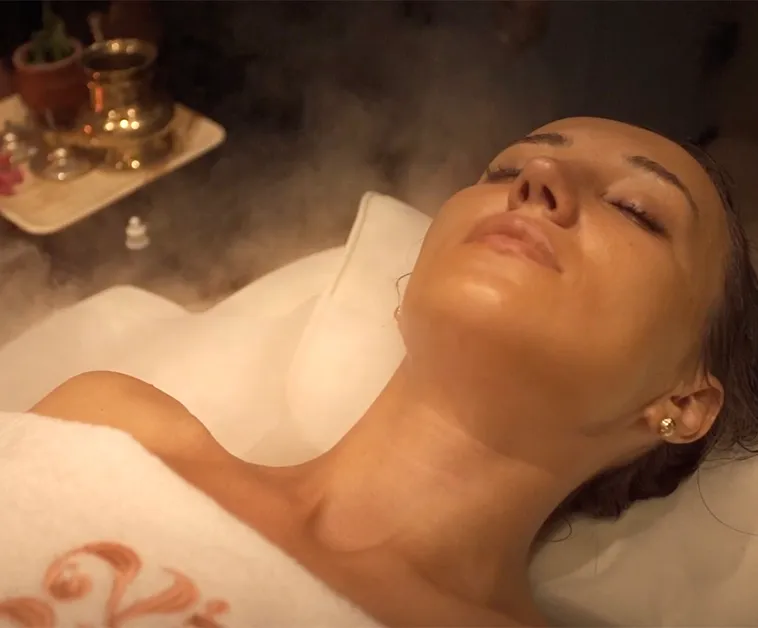
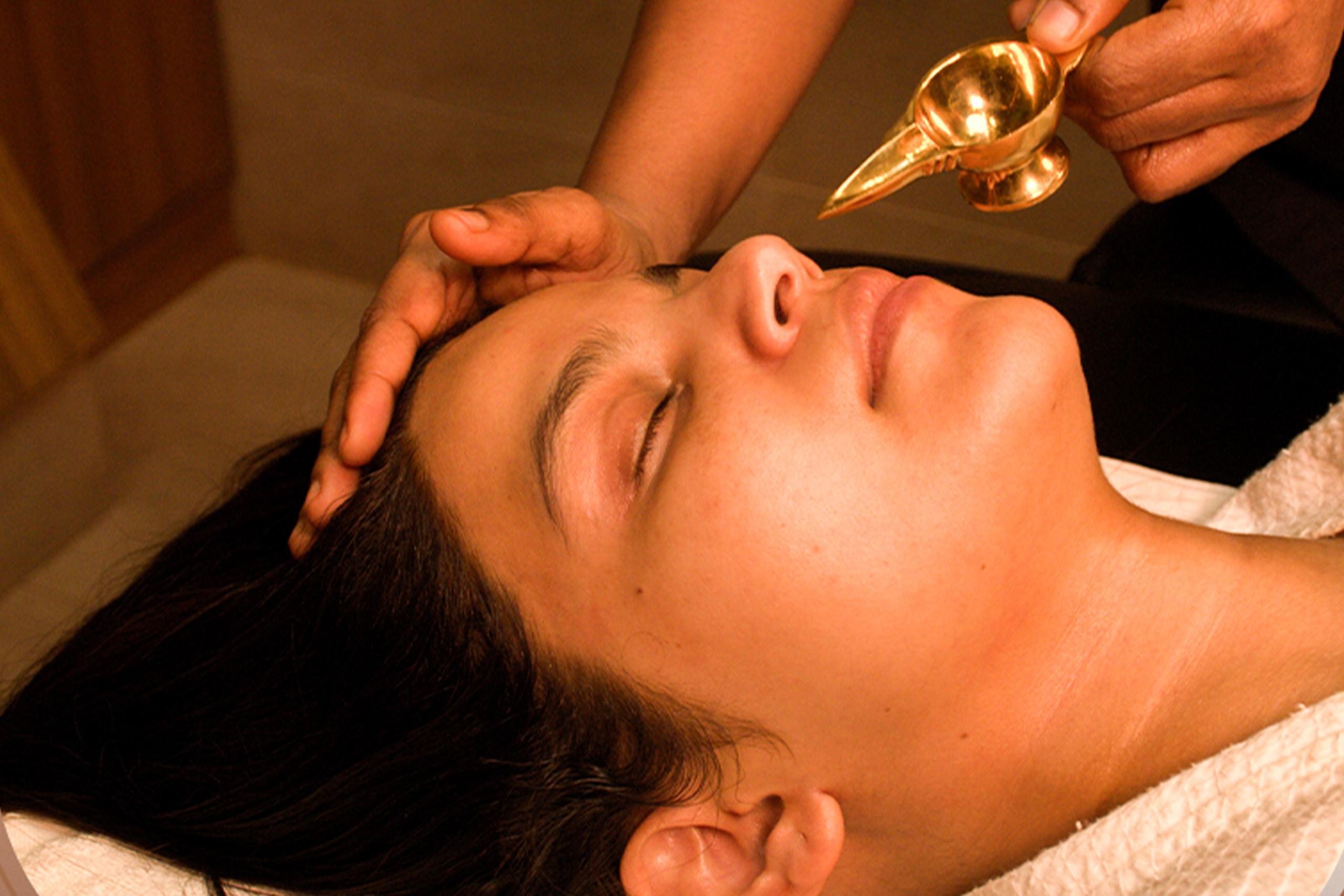
The procedure is short and precise. The face, neck and shoulders are massaged with warm oil and gently steamed, and then a measured number of drops is placed in each nostril while the head is tilted back.
Ayurveda traditionally uses Nasyam for a blocked or reactive nose, a heavy head, and tension around the neck and shoulders, and many guests take it as a seasonal course. It is supportive care. It does not replace allergy or sinus medication, and the practitioner will ask about your health first.
Key Benefits
Traditionally used to clear the nasal passages and ease congestion
Traditionally used for a heavy head and tension headaches
Includes a warm face, neck and shoulder massage
One of the five classical Panchakarma procedures
Short enough to combine with another therapy on the same visit
What happens during Nasyam
- 1
Assessment
The practitioner asks about your nose, sinuses, headaches and any medication, and chooses the oil and the number of drops.
- 2
Face and shoulder massage
Warm oil is massaged into the face, neck and shoulders.
- 3
Steam
Gentle steam or a warm towel is applied to the face to open the passages. The eyes are protected.
- 4
The drops
You lie with the head tilted back. The therapist places the drops in each nostril in turn and asks you to breathe in gently. The soles, palms and shoulders are rubbed while the oil settles.
- 5
Clearing
You may feel oil at the back of the throat. You are asked to spit it out rather than swallow, and to gargle with warm water.
Who usually books it
- People with a nose that blocks easily in air conditioning or dust
- Guests who feel heaviness in the head and face
- Those who carry tension in the neck and shoulders
Often chosen for
Our practitioners draw on Nasyam in plans for these concerns. Each page explains the approach and what it can and cannot do.
Read more
When to wait or ask first
- Fever, an active cold or a sinus infection with fever
- Straight after a meal, a shower or exercise
- Pregnancy and menstruation, by classical guidance
- Children, unless the practitioner advises it
- Recent nasal surgery or frequent nosebleeds: speak to the practitioner and your doctor first
Oils and herbs
Anu Tailam is the classical oil for general Nasyam. Ksheerabala and Shadbindu Tailam are also used. The practitioner selects the oil and the dose.
After your session
- Avoid cold drinks, cold air and washing your hair for a couple of hours
- Some discharge from the nose or throat afterwards is expected and passes
- Eat light, warm food
- Avoid sleeping straight afterwards
How often
The traditional course is seven consecutive days, often repeated at the change of season. Single sessions are also given.
Frequently Asked Questions
There can be a brief sharp sensation as the oil reaches the passages, and it passes within moments. The face massage and steam beforehand make it much easier.
Nasyam is traditionally used in Ayurveda for a congested, reactive nose, and many guests take it as a seasonal course. It is supportive care and does not replace allergy medication or your doctor's advice.
Seven consecutive days is the traditional course. Some guests return for a single session each month.
Avoid cold drinks, cold air and heavy meals for two hours. Some nasal discharge afterwards is expected.
A simple daily version with one or two drops exists in Ayurveda, but ask our practitioner to show you first and to confirm it suits you.
The face, neck and shoulders are massaged with oil and gently warmed first. You then lie with the head tilted slightly back while a few drops of medicated oil are placed in each nostril. You rest for a few minutes, and are asked to spit out anything that reaches the throat.
Anu Tailam is the oil most often named in the classical texts for regular use, and Ksheerabala is another customary choice. The practitioner decides which oil and how many drops after asking about your health. Tell us about any allergy before the session.
Have a question we have not covered? Send it to the front desk.