Relax & Rejuvenate
Shirodhara
A continuous stream of warm herbal oil gently poured on the forehead to calm the mind and nervous system.
Shirodhara
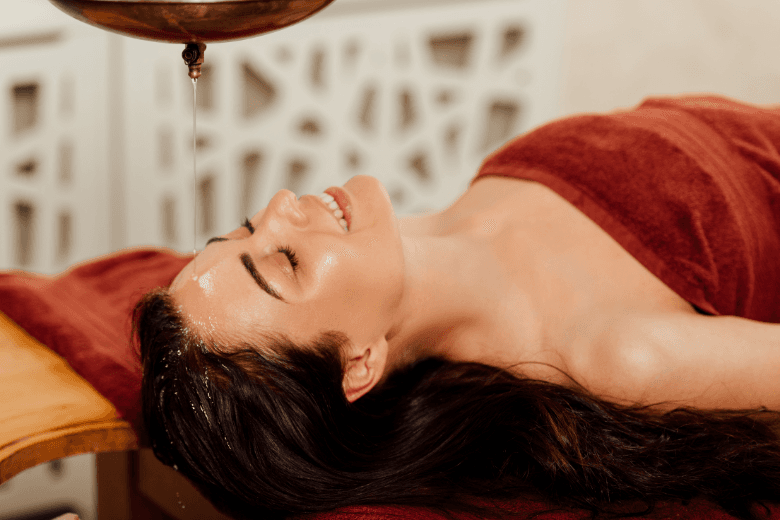
Shirodhara is one of the most recognised therapies in Ayurveda. The name joins two Sanskrit words: shiro, the head, and dhara, a flow. A steady stream of warm medicated oil is poured over the forehead from a vessel hung above the treatment table, and the therapist moves the stream slowly from temple to temple.
Classical texts place Shirodhara among the head therapies used when Vata dosha is disturbed, which Ayurveda associates with a restless mind, light sleep and a sense of being wired and tired. The steady warmth, the rhythm of the stream and the quiet room are what most guests remember: many describe the session as the point in the week when the mind finally slows down.
At 22 Ayur the therapy is given by trained Ayurvedic therapists, and the oil is chosen by the practitioner according to your constitution and the season. Shirodhara is supportive care. It does not replace medical treatment for a sleep or anxiety disorder, and our practitioner will ask about your health before recommending it.
Key Benefits
Traditionally used to settle a busy, overworked mind
Deeply calming; many guests report that they sleep more easily afterwards
Traditionally chosen when Vata dosha is disturbed
A quiet, unhurried hour away from screens and noise
Leaves the scalp and hair oiled and nourished
Often taken as a short course alongside Abhyangam
What happens during Shirodhara
- 1
A short conversation
The practitioner or therapist asks how you have been sleeping, what brings you in, and whether you have any condition or medication we should know about. The oil is chosen at this point.
- 2
Head and shoulder massage
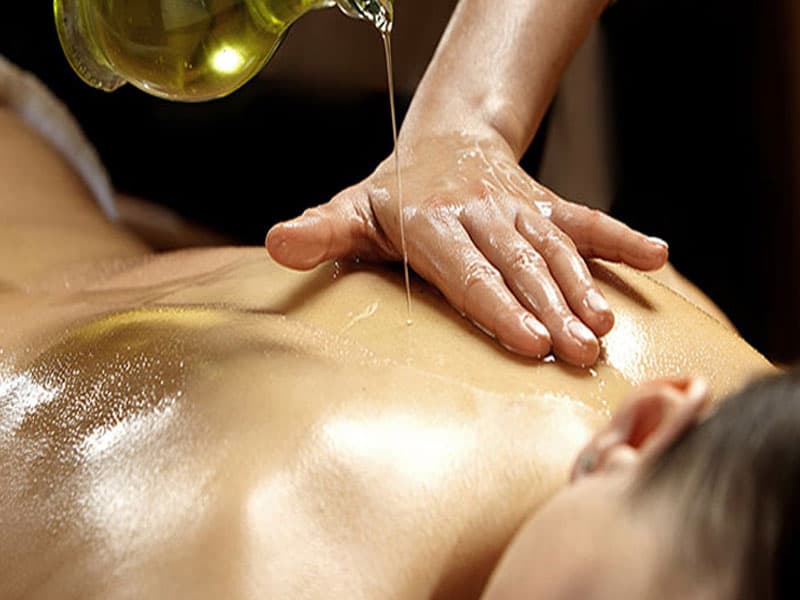
You lie on your back on the treatment table. The session usually opens with a gentle oil massage to the scalp, neck and shoulders so the body is already settling when the stream begins.
- 3
The stream
A vessel with a small opening hangs above your forehead. Warm oil runs through it in a thin, even stream while the therapist moves it slowly across the forehead. A cloth band keeps oil out of your eyes. The oil is collected, rewarmed and kept at a steady temperature throughout.
- 4
Rest
When the stream stops the therapist wipes the forehead and lets you rest for a few minutes before you sit up. Getting up slowly matters: many people feel pleasantly heavy for a short while.
Who usually books it
- People with demanding, screen-heavy work who find it hard to switch off
- Light or broken sleepers looking for a calming routine
- Anyone who carries tension in the scalp, jaw and forehead
- Guests who want a quiet therapy with very little physical pressure
Often chosen for
Our practitioners draw on Shirodhara in plans for these concerns. Each page explains the approach and what it can and cannot do.
Read more
When to wait or ask first
- Fever, a cold, or a heavy sinus infection on the day: wait until it clears
- A cut, rash or infection on the scalp or forehead
- Late pregnancy, when lying flat on the back is uncomfortable: ask the practitioner first
- If you are under care for a neurological or psychiatric condition, tell us and keep to your doctor's plan
Oils and herbs
Sesame oil prepared with herbs is the classical base. Ksheerabala and Chandanadi oils are common choices in the Kerala tradition, and a cooling variant called Takradhara uses medicated buttermilk in place of oil. Which one is used for you is the practitioner's decision on the day.
After your session
- Keep the head covered and out of strong air conditioning for an hour or two
- Leave the oil in for a while if you can, then wash with a mild shampoo and warm water
- Eat something light and warm; avoid a heavy meal straight afterwards
- Plan a quiet evening rather than a workout or a late night
How often
In the classical approach Shirodhara is taken as a course on consecutive days, commonly three, five or seven. Many guests also come for single sessions every few weeks. The practitioner will suggest what fits your reason for coming.
Frequently Asked Questions
Most guests describe a warm, steady, rhythmic sensation on the forehead that quiets the mind within a few minutes. Some drift close to sleep. There is no pressure involved.
Shirodhara is traditionally used in Ayurveda to settle a busy, stressed mind, and many guests describe it as deeply calming. It is supportive care, not a treatment for an anxiety disorder. If you are under medical care for anxiety, continue it and tell our practitioner.
Arrive ten minutes early and avoid a heavy meal in the two hours before. Wear comfortable clothing. The oil will be in your hair, so bring a scarf or cap and plan to wash it later.
A course on three to seven consecutive days is the traditional pattern. For general relaxation, guests often come once every two to four weeks.
No. A soft cloth band is tied above the eyebrows so the oil runs back into the hair and into the tray under the table.
Yes, but sit for a few minutes first. Many people feel very relaxed straight after the session.
Have a question we have not covered? Send it to the front desk.