Frozen Shoulder: Stages, Medical Care and Ayurvedic Support
How does Ayurveda approach a frozen shoulder?
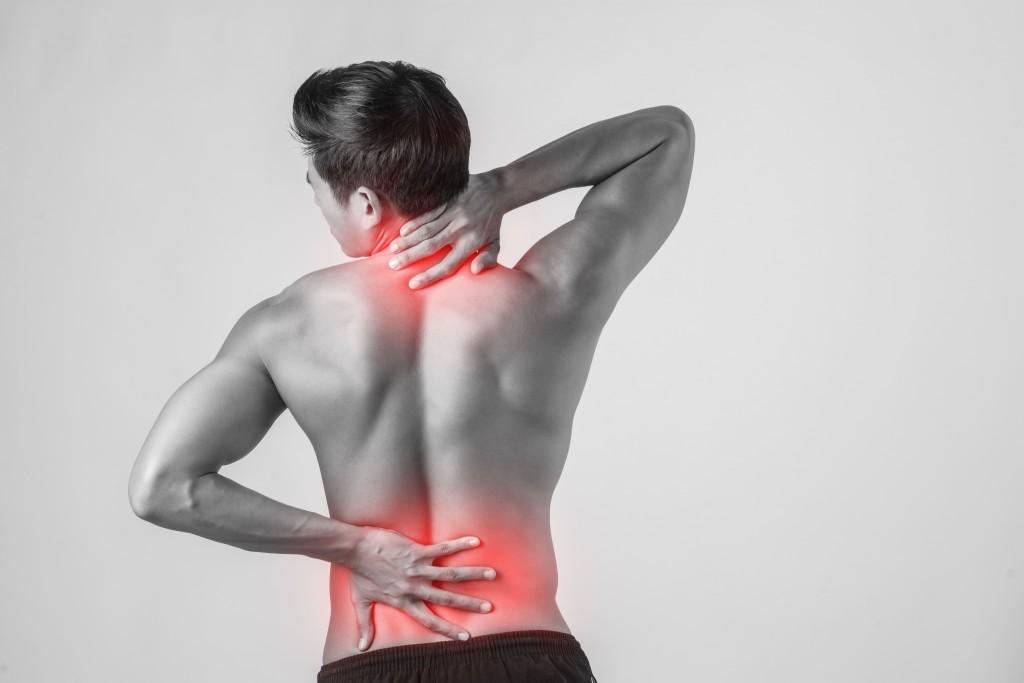
A frozen shoulder is painful and stiff for months, sometimes years, and the NHS says it usually eases in the end. We take it in four stages of our own, not medical phases: the first weeks of pain, the diagnosis, the stiff months and the return of movement. A doctor and exercises come first. Ayurvedic warmth and oil fit in the stiff months, as comfort beside the exercises.
Frozen shoulder means a shoulder that stays painful and stiff for months, sometimes years. The NHS says the pain and stiffness usually go away in the end. This page takes it in four stages of our own, which are not medical phases. They are the first weeks of pain, the diagnosis, the long stiff months and the return of movement.
Does a frozen shoulder come in stages?
The NHS page on frozen shoulder gives no timetable of stages. It says the shoulder is painful and stiff for months, sometimes years, and that this usually passes. We give no stage lengths, because our sources give none.
The four stages below are our own way of putting the advice in order. They are not medical phases, and your doctor may describe your shoulder differently.
| Stage | What is happening | What the NHS advises | Where Ayurvedic warmth fits |
|---|---|---|---|
| One: the first two weeks. | A shoulder has started to hurt. | Keep it moving gently. Use heat or cold packs. | Not yet. Watch the shoulder first. |
| Two: the diagnosis. | The pain and stiffness have not gone away. | See a doctor. | After the doctor has named the problem. |
| Three: the stiff months. | The shoulder is painful and stiff for months, sometimes years. | Do the exercises you are given. Use a heat pack. | Kizhi, Upanaham or oil massage, beside the exercises. |
| Four: movement returns. | Pain and stiffness ease. | Keep the shoulder moving. | A massage now and then, if you like it. |
Stage one: a shoulder that has just started to hurt
At this point nobody can call it a frozen shoulder. The NHS page on shoulder pain says shoulder pain can usually be eased at home. Stay active and move the shoulder gently. Do not stop using it altogether, and leave heavy gym equipment alone.
The NHS suggests a heat or cold pack for up to 20 minutes at a time, and paracetamol or ibuprofen. It also tells you to sit upright and not slouch, with a cushion behind your lower back and one under the sore arm.
The same page lists signs that need urgent medical advice:
- The pain is sudden or very bad, or it began after a fall or other injury.
- You cannot move your arm.
- The arm or shoulder has changed shape or is badly swollen.
- You have pins and needles that do not go away, or no feeling in the arm or shoulder.
- The arm or shoulder feels hot or cold to the touch.
- Both shoulders hurt severely, or you feel feverish or unwell.
We would rather you did not book a therapy at this stage. A new, hot, swollen or injured shoulder is not one for warm oil.
Stage two: when should a doctor look at it?
The NHS page on shoulder pain says to see a doctor if the pain is getting worse or has not got better after two weeks. Its page on frozen shoulder names two reasons to go. One is pain and stiffness that do not go away. The other is pain so bad that it is hard to move your arm and shoulder.
Frozen shoulder is a diagnosis, and a doctor makes it. A stiff, sore shoulder can have other causes. One is cervical spondylosis, which the NHS calls a normal part of ageing and a common cause of neck and shoulder pain in people over 40. With neck pain, heaviness or weakness in an arm needs urgent medical advice.
Bring the diagnosis to us afterwards. The US National Center for Complementary and Integrative Health (NCCIH) advises people not to use Ayurvedic medicine to put off seeing a medical doctor.
Stage three: what helps in the long stiff months?
The NHS advice for a diagnosed frozen shoulder is short. Follow the exercises from your doctor or physiotherapist. Keep moving the shoulder gently. Take paracetamol if you need it, within the daily dose on the pack.
It also suggests a heat pack or a hot water bottle, wrapped, for up to 20 minutes at a time. It warns you not to make up strenuous exercises of your own.
This is the stage at which Ayurvedic therapies fit. They bring warmth and oil to the shoulder, as comfort beside the exercises and not in place of them.
Which Ayurvedic therapies are used on a stiff shoulder?
Four of our therapies reach the shoulder. Which one depends on the examination, and a plan may hold two.
Sweda with Kizhi
Kizhi means bundle: herbs, powder or rice tied into muslin, about the size of a fist. In Sweda with Kizhi the skin is oiled first. The therapist then warms the bundles and presses and glides them over the shoulder and upper back, swapping each one as it cools. Our guide to the types of Kizhi explains the leaf, powder and rice forms.
Upanaham
Upanaham is a warm herbal paste spread thickly over a joint, covered with warmed leaves and bound with cotton cloth. The wrap goes home with you and stays on for as long as the practitioner says. It is slow, mild warmth held for a long time. It is usually booked for a joint that feels stiff on waking.
Greeva Vasti
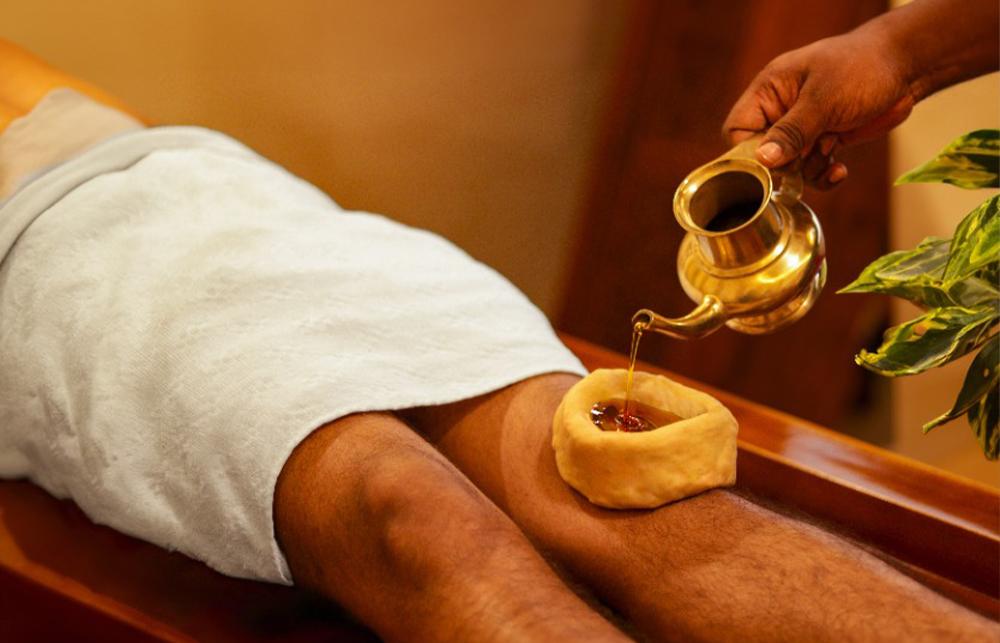
In Greeva Vasti a ring of black gram dough is set on the back of the neck and filled with warm medicated oil. Greeva means neck. It sits on the neck and not on the shoulder joint, so it is chosen when the neck and the top of the shoulders are tight as well.
Oil massage
The Back and Shoulder Massage uses circular strokes round the shoulder blades and across the top of the shoulders. You lie face down for it. Tell the therapist before the session if that position, or lifting the arm, hurts. Expect firm pressure, and say if you want less.
How do the classical texts describe a stiff shoulder?
The Sushruta Samhita (Nidanasthana 1) names two conditions. In Amsa shosha, Vata dries up the Kapha at the shoulder joint. In Apabahuka, Vata tightens the cords of the arm.
We cannot say that either is the same thing as the frozen shoulder a doctor diagnoses today. They show that a stiff, painful shoulder was known and written about long ago.
For care, the Charaka Samhita (Chikitsasthana 28) sets oil first and warmth second for Vata disorders. It lists massage, a warm covering and a room out of the wind among the things that help. The Sushruta Samhita (Chikitsasthana 4) names nasal medicine among the measures for Vata lodged in the shoulders or neck. Our form of that is Nasyam, which the practitioner may or may not add.
Has any of this been tested on frozen shoulder?
No. We have found no clinical trial of Kizhi, Upanaham, Greeva Vasti or Nasyam for frozen shoulder.
The nearest evidence is on massage for neck and shoulder pain in general. The NCCIH page on massage therapy cites a 2013 review of 12 studies with 757 participants. Its summary is that massage may help neck and shoulder pain, and that the benefit may be short lived.
So the case for these therapies rests on tradition and on how warmth feels on a stiff joint. Mainstream advice on warmth goes as far as the heat pack the NHS suggests.
Stage four: what to do as movement comes back
The NHS says the pain and stiffness of a frozen shoulder usually go away eventually. Its page on shoulder pain in general says recovery can take 6 months or longer, and that shoulder exercises need doing for 6 to 8 weeks. So keep going with the exercises you were given after the shoulder starts to feel better.
If you have liked the warmth, Kizhi every two or three weeks is the usual pattern for upkeep. A massage has no fixed rule.
When should a shoulder therapy wait?
Anyone at stage one or two should see a doctor before a therapist. After a diagnosis, tell our practitioner if any of these apply:
- The shoulder is hot, red or swollen, or was injured recently.
- You have a fever.
- The skin over the shoulder is broken, infected or has a rash.
- Feeling in the skin is reduced, for example by diabetic neuropathy. The therapist keeps the heat low.
- You have tingling or numbness in a hand, or you feel dizzy when you look up.
- You are pregnant.
- Herbs, leaves or adhesive dressings have given you an allergic reaction.
Keep taking any medicine you were prescribed, and tell your doctor about the Ayurvedic therapy.
How does a visit for a frozen shoulder go at 22 Ayur?
Bring your diagnosis and any scan or X-ray report to the Ayurveda consultation. It is with Dr Thasni, our medical director, who is a DHA licensed Ayurveda practitioner. You will be asked where the stiffness sits and whether it travels down the arm. The rest is in our guide to a first Ayurvedic consultation.
Which therapy you have, and which oil or paste, is the practitioner's decision. Our Kerala trained therapists give it, and a female therapist is available if you ask.
Tradition gives Kizhi daily for seven to fourteen days when the problem is long standing. Upanaham is repeated daily for a course, often seven days. Stay warm for an hour or two after Kizhi, and do not take a cold shower. The other therapies that may be added are on our neck and shoulder pain page.
We are on Al Mina Road in Jumeirah, near Port Rashid, and booking is by WhatsApp or phone through our contact page. The clinic is closed on Mondays. Hours are 10:00 to 21:30 from Tuesday to Friday, and 09:00 to 21:30 on Saturday and Sunday. The receipt you are given can go to your insurer.
If your lower back is the stiffer part, our article on back pain treatment in Dubai helps you choose a therapy for that.
Questions people ask
How long does a frozen shoulder last?
The NHS says a frozen shoulder is painful and stiff for months, sometimes years, and that the pain and stiffness usually go away eventually. It gives no fixed length. Your own doctor or physiotherapist is the person to ask how yours is going.
Is heat good for a frozen shoulder?
The NHS lists a heat pack or a wrapped hot water bottle, for up to 20 minutes at a time, among the things you can do yourself. Kizhi and Upanaham are traditional ways of holding warmth on a joint. They are not for a shoulder that is hot, red, swollen or newly injured.
Can I keep doing physiotherapy during a course of Kizhi?
Yes. The NHS advice is to follow the exercises from your doctor or physiotherapist and to keep the shoulder moving gently, and Ayurvedic therapies sit beside that. After Kizhi, rest the area that day and leave heavy exercise until the next. Ask the practitioner how to fit your exercises round the sessions.
Does Kizhi hurt on a stiff shoulder?
It should not. Each bundle is tried on the therapist's own skin and then on yours, and is changed as it cools. Speak up if a bundle is too hot or a position hurts the shoulder.
What should I wear with an Upanaham wrap on my shoulder?
Wear old, loose clothing that goes on easily over the wrap. The paste is oily and dark, and a little may seep through the cloth. Keep the wrap dry until it comes off, and loosen or remove it at once if you feel numbness, burning or itching.
Sources
- Frozen shoulder. NHS, 2024.
- Shoulder pain. NHS, 2023.
- Cervical spondylosis. NHS, 2023.
- Ayurvedic Medicine: In Depth. National Center for Complementary and Integrative Health, US National Institutes of Health, 2019.
- Sushruta Samhita, Nidanasthana 1 (Vatavyadhi Nidana). Wisdom Library, text of K. K. L. Bhishagratna's English translation.
- Charaka Samhita, Chikitsasthana 28 (Vatavyadhi Chikitsa). Charak Samhita Research, Training and Development Centre.
- Sushruta Samhita, Chikitsasthana 4 (Vatavyadhi Chikitsa). Wisdom Library, text of K. K. L. Bhishagratna's English translation.
- Massage Therapy: What You Need To Know. National Center for Complementary and Integrative Health, US National Institutes of Health, 2019.
“Frozen Shoulder: Stages, Medical Care and Ayurvedic Support” was written by the 22 Ayur clinic team. It was published and last updated . It describes traditional practice and is not medical advice. For advice on your own situation, an Ayurveda consultation at 22 Ayur is with Dr Thasni, the clinic’s medical director, who is licensed by the Dubai Health Authority as an Ayurveda Practitioner. How we review content.
Related care at 22 Ayur
- Kadeevasti / Greevasti / Januvasti
Warm medicated oil is held in a ring of dough over the lower back, neck or knee, keeping steady warmth on one area.
- Sweda with Kizhi
Warm bundles of herbs are dipped in oil and pressed rhythmically over the body, bringing moist heat to stiff muscles and joints.
- Back & Shoulder Massage
A short massage with warm herbal oil that covers the back and the shoulders.