A New Mother's Guide to Postnatal Care
What is Ayurvedic prenatal and postnatal care?
Traditional postnatal care in Ayurveda, called Sutika Paricharya, is some weeks of rest, warmth, plain food and warm oil for the mother. Medical advice for the same weeks covers bleeding, stitches, the pelvic floor, urgent warning signs and a check at 6 to 8 weeks. At 22 Ayur, postnatal massage starts only when your doctor agrees. We know of no clinical trial of the tradition.
Traditional postnatal care in Ayurveda is called Sutika Paricharya: some weeks of rest, warmth, plain food and warm oil for the mother after a birth. Medical advice for the same weeks covers bleeding, stitches, the pelvic floor and a check at 6 to 8 weeks. This guide sets the two side by side, stage by stage. Where they differ, follow your doctor.
What is Sutika Paricharya?
Sutika Paricharya is Ayurveda's name for the care of a mother in the weeks after she gives birth. Two classical texts set it out. The Charaka Samhita (Sharirasthana 8) describes oil, a cloth wrap, thin gruel and warm baths. The Sushruta Samhita (Sharirasthana 10) has the mother oiled, washed with plenty of warm water and kept from hard work.
The reasoning belongs to the tradition. The Charaka Samhita has the cloth wrapped firmly so that Vata, the principle of movement, finds no room.
These texts show how old the custom is. They cannot show what it achieves. A reference page on Sutika Paricharya comes from the research centre that publishes the Charaka Samhita online. It says itself that these old practices have changed a great deal.
The first eight weeks at a glance
| Stage | In the tradition | Medical advice from the NHS | At 22 Ayur |
|---|---|---|---|
| Days 1 to 7. | Oil, a cloth wrap, thin gruel and warm baths. | Bleeding is heavy at first. Learn the warning signs. | Nothing until your doctor agrees. |
| Weeks 2 to 4. | Oiling, warmth and warm water go on. | Pelvic floor squeezes. Look after your back at feeds. | Your doctor decides when massage can start. |
| Weeks 4 to 6. | The same routine, often daily at home. | Bleeding fades over a few weeks. | Mother and baby massage, with your doctor's agreement. |
| Weeks 6 to 8. | Care goes on for a month or more. | The postnatal check. | Tell us what the check found. |
The split into stages is ours. The NHS gives a set time only for the postnatal check.
Days 1 to 7: what does the first week involve?
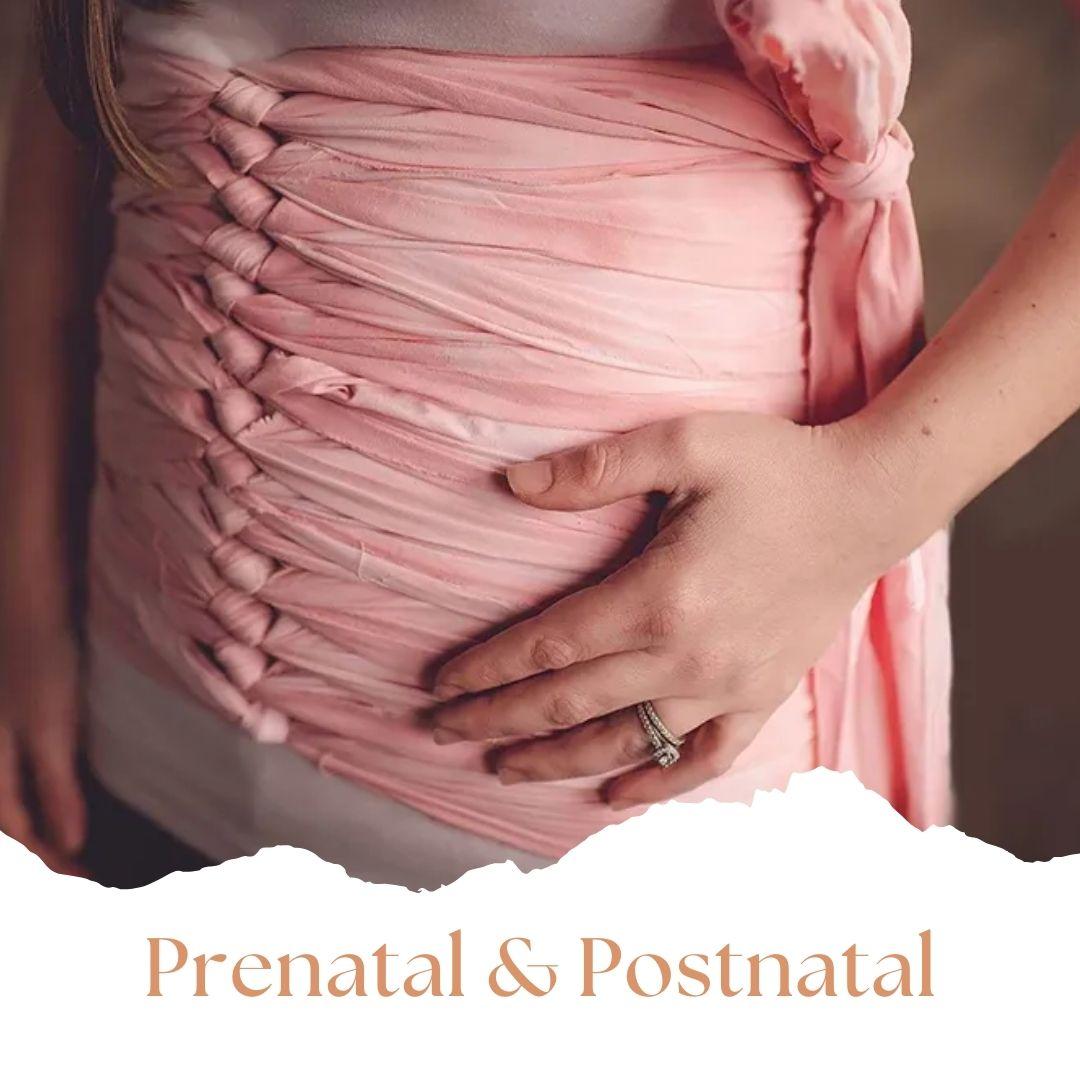
The Charaka Samhita gives a routine for the first five to seven nights. The mother's abdomen is rubbed with ghee and oil and wrapped firmly in a large cloth. She then has thin gruel and a warm bath.
For the same week, the NHS page on your body after the birth says bleeding is heavy at first and fades over a few weeks. It says not to use tampons until after your 6 week check. It also says to tell your midwife about sore stitches or clots in the bleeding.
Rubbing and binding the abdomen in these first days is the texts' practice. Binding is not on our treatment list. In our sessions the abdomen is left alone unless your doctor has agreed otherwise, and nothing starts until your doctor says you may.
Which signs after a birth need a doctor straight away?
The NHS lists signs that a mother should report straight away. It names the midwife, health visitor or family doctor. In Dubai, call your own doctor or the hospital where you gave birth. If you cannot reach them, go to an emergency department.
- You have pain, swelling or redness in the calf of one leg. This can be a blood clot.
- You have chest pain or find it hard to breathe. This can be a clot in the lung.
- You lose blood suddenly or very heavily, with or without feeling faint or a racing heart.
- You have a high temperature, or a sore and tender tummy. This can be an infection.
- You have a headache, changes in your vision or vomiting. These can be signs of pre-eclampsia.
None of these is a reason to book a massage. With pain or swelling in one leg, see your doctor and put the massage off. The US National Center for Complementary and Integrative Health (NCCIH) gives the general rule. Do not use massage to put off seeing a doctor about a medical problem.
Weeks 2 to 4: how does the tradition use oil and warmth?
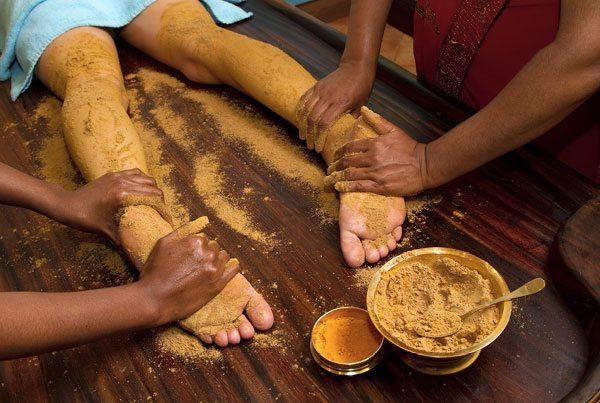
After the first week the tradition keeps the mother warm and oiled. The reference page on Sutika Paricharya describes whole body oil massage, warmth and hot water, kept up for at least one month. In Kerala homes the oiling is traditionally daily in the first weeks, and the customary oil is Dhanwantharam Tailam, a classical sesame based oil.
Food is stepped up slowly in the texts, starting with thin gruel. We give this as history and do not prescribe it. The NHS advises against herbal medicines while you are breastfeeding, and asks you to tell your doctor about any complementary therapy you use.
The NHS guide to your post-pregnancy body suggests pelvic floor squeezes at least three times a day. For your back, it says to sit supported and straight when you feed, kneel or squat for low tasks, and bend your knees to lift. If your stomach muscles have separated, it says to avoid sit-ups, planks, high-impact exercise and heavy lifting at first.
Weeks 4 to 6: when can postnatal massage start?
Postnatal massage can start when your doctor says so. After a caesarean, wait until the wound has closed and your doctor has cleared you for massage. Even then, the scar and the abdomen are not massaged.
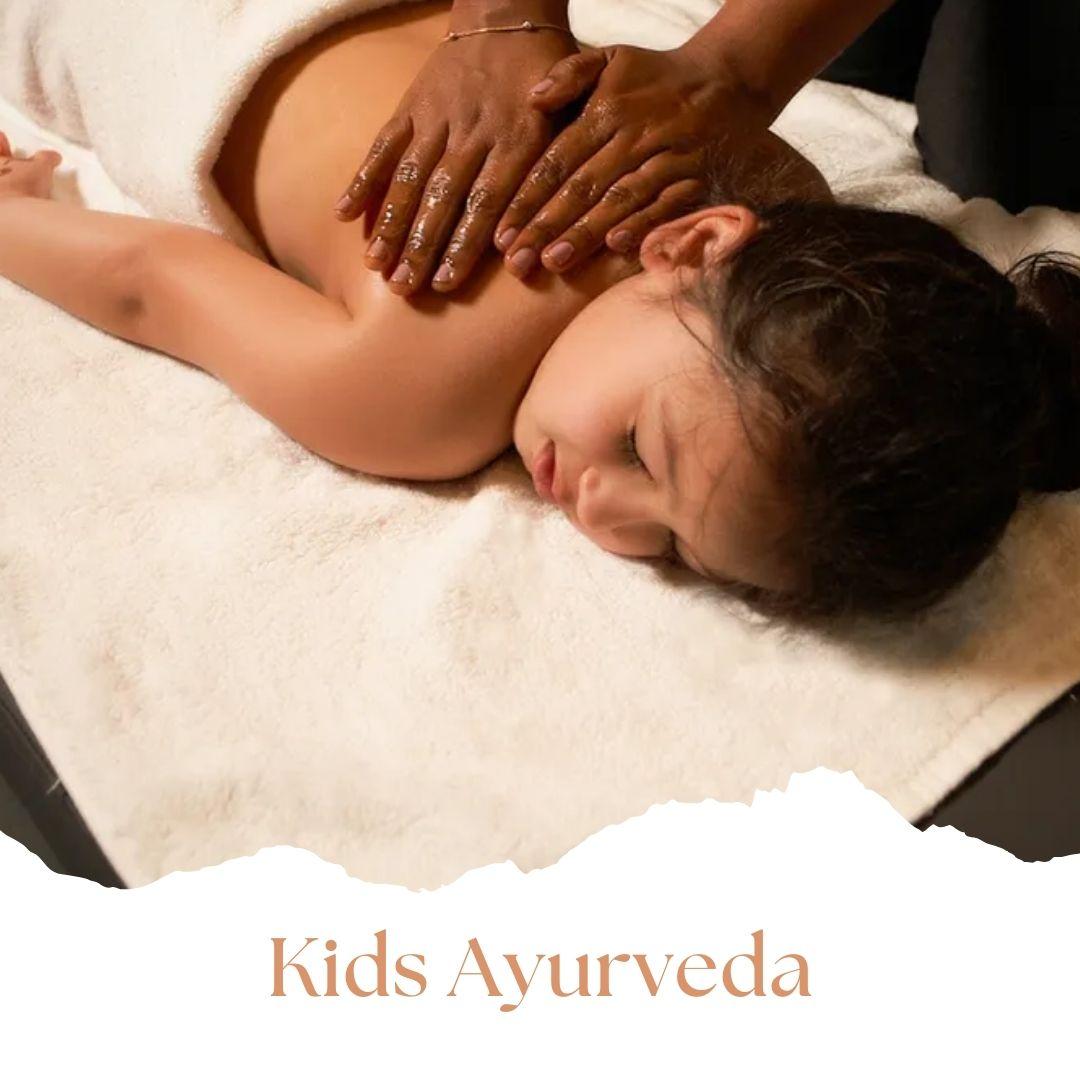
Your baby's age matters too. Our Mother and Baby Massage takes babies from one month to twelve months old, once your paediatrician is happy for your baby to be massaged. You lie on the treatment table. Your baby lies on a soft mat beside you with a second therapist, where you can see and reach your baby the whole time.
The baby's part is short and light. Our article on Shishu Abhyanga, the traditional baby massage, walks through it and lists the days when a baby should not be massaged.
Weeks 6 to 8: what does the postnatal check cover?
The NHS says a postnatal check should happen 6 to 8 weeks after the birth. It usually covers how you are feeling in yourself, discharge and periods, any stitches, contraception, feeding and weight. Blood pressure is checked if there were problems.
The NHS asks you to speak up at this check. Tell the doctor if you feel sad or anxious, because help is available. Say so if you have trouble holding in wind or urine, or pain during sex. If the gap between your stomach muscles is still obvious at 8 weeks, the NHS says to contact your doctor.
Massage is not care for low mood. That belongs with your doctor. Later on, once your periods are back, our women's health page covers cycle care.
What has research tested about postnatal massage?
Very little. We know of no clinical trial of Sutika Paricharya, or of the Kerala oil massage given after a birth. Our sources hold no study of abdominal binding either.
On massage in general, the NCCIH says the risk of harm is low. It also notes rare reports of serious harm such as a blood clot or a nerve injury, some of them after vigorous deep tissue massage. A postnatal session uses light to moderate pressure.
So the case for the tradition is custom and comfort. We make no claim about recovery, weight or the shape of your body. The NHS says the tummy stays bigger for a while after a birth.
Who should wait or check with a doctor first?
Every new mother should ask her doctor before a first session. The WHO benchmarks for the practice of Ayurveda name postnatal women among the groups that need special precautions. At 22 Ayur we ask you to put the massage off, and to see your doctor, if any of these apply:
- You have a fever.
- You are bleeding heavily.
- Your wound is red or weeping, or it worries you.
- You have pain or swelling in one leg.
- You have high blood pressure.
- You had a caesarean and your doctor has not yet cleared you for massage.
For the baby, ask your paediatrician first. A baby with a fever or a rash, or one who was vaccinated recently, is not massaged. Come on another day instead.
What does a postnatal visit to 22 Ayur involve?
The visit starts with questions. The practitioner asks how many weeks ago the birth was, whether it was a caesarean, and what your doctor and paediatrician have said about massage. Ayurveda consultations at 22 Ayur are with Dr Thasni, our medical director and a DHA licensed Ayurveda practitioner.
Warm oil then goes on your back, shoulders, arms, legs and feet with slow, even strokes. You can lie on your side with cushions if lying on your front is uncomfortable. If your baby wants a feed or a cuddle, both massages pause. At the end the oil is wiped from your skin and your baby's, and you rest together before dressing.
The clinic is on Al Mina Road in Jumeirah, near Port Rashid, and is closed on Mondays. Hours are 10:00 to 21:30 from Tuesday to Friday, and 09:00 to 21:30 on Saturday and Sunday. Therapists are trained in Kerala, and you can ask for a female therapist. Our postnatal care page lists the sessions, and you can book from the contact page.
What if you are still pregnant?
Ayurveda's guidance for pregnancy is called Garbhini Paricharya. The Charaka Samhita, in the same chapter, says illness in pregnancy is to be handled with soft and mild measures. It says a pregnant woman should be handled like a pot filled to the brim with oil.
The WHO benchmarks ask for the same special precautions in pregnancy. Our Prenatal Massage generally starts after week 12, with your obstetrician's agreement. You lie on your side with cushions, and the abdomen is not massaged with pressure.
A 2021 review of 12 randomised trials of relaxation massage in pregnancy covered healthy women from 12 weeks onward. Most trials left out women with complications and only two reported on side effects, so the review says little about a complicated pregnancy.
Bleeding, leaking fluid, severe swelling, a severe headache or fewer movements are for your obstetrician, not for us.
Questions people ask
How soon after a caesarean can I have a postnatal massage?
Only once your doctor has cleared you for massage and the wound has closed. Tell the practitioner the date of the operation and what your doctor advised. Even then, the scar and the abdomen are not massaged. If your doctor says wait, we wait.
Can I bring my baby to my massage?
Yes. In a Mother and Baby Massage you are both in the same room. Your baby lies on a soft mat beside the treatment table with a second therapist. The session is for babies from one month to twelve months old, and both massages pause whenever your baby wants a feed or a cuddle.
Which oil is used for a new mother?
Dhanwantharam Tailam, a classical sesame based oil, is the customary choice in Kerala after a birth. The practitioner chooses the oil on the day. Babies are massaged with a plain, mild oil such as coconut oil. Tell us about any allergy or skin sensitivity before the session.
How often do new mothers come for massage?
In Kerala households the oiling is traditionally daily in the first weeks after a birth. At a clinic, mothers usually come once a week or once a fortnight, as their doctor allows. Your doctor's advice sets the pace.
Will postnatal massage help me lose weight or get my body back?
We make no such claim. The massage is for comfort and rest in a demanding few weeks. The NHS says the tummy stays bigger for a while after a birth and comes back gradually with a balanced diet and exercise. For questions about weight, the pelvic floor or separated stomach muscles, please see your doctor.
Sources
- Charaka Samhita, Sharirasthana 8 (Jatisutriya Sharira), verses 22, 28, 32, 38, 42 to 50. Charak Samhita Research, Training and Development Centre.
- Sushruta Samhita, Sharirasthana 10 (Garbhini Vyakarana). Wisdom Library, text of K. K. L. Bhishagratna's English translation.
- Concept page, not a verse. It cites Kashyapa Samhita Khila Sthana 10 and 11 (11/6, 11/18 to 22, 11/28 to 34, 11/52 to 53), Ashtanga Hridaya Sharira Sthana 1/99 and 1/101, Charaka Sharira Sthana 8/48 and Sushruta Sharira Sthana 10/16 to 17. The Kashyapa and Ashtanga Hridaya passages were not read at source. Charak Samhita Research, Training and Development Centre.
- Your body after the birth. NHS, 2024.
- Massage Therapy: What You Need To Know. National Center for Complementary and Integrative Health, US National Institutes of Health, 2019.
- Herbal medicines and complementary therapies. NHS, 2026.
- Your post-pregnancy body. NHS, 2026.
- Your 6-week postnatal check. NHS, 2026.
- WHO benchmarks for the practice of Ayurveda. World Health Organization, 2022.
- Effects, Side Effects and Contraindications of Relaxation Massage during Pregnancy: A Systematic Review of Randomized Controlled Trials. Mueller SM and Grunwald M, Journal of Clinical Medicine, 2021.
“A New Mother's Guide to Postnatal Care” was written by the 22 Ayur clinic team. It was published and last updated . It describes traditional practice and is not medical advice. For advice on your own situation, an Ayurveda consultation at 22 Ayur is with Dr Thasni, the clinic’s medical director, who is licensed by the Dubai Health Authority as an Ayurveda Practitioner. How we review content.
Related care at 22 Ayur
- Prenatal Massage
A gentle Ayurvedic massage with warm oil, adapted for pregnancy and given lying on your side with cushions for support and no pressure on the abdomen.
- Mother & Baby Massage
A warm oil massage for a new mother, with a gentle oil massage for her baby given beside her in the same session.